

Bugonia: On What We Make From Ruin
A myth‑infused critique of how communities create their own monsters and miracles, revealing collapse as the moment when new solidarities can begin.
Spoiler alert: This essay discusses the film Bugonia (2025) in full, including its ending.
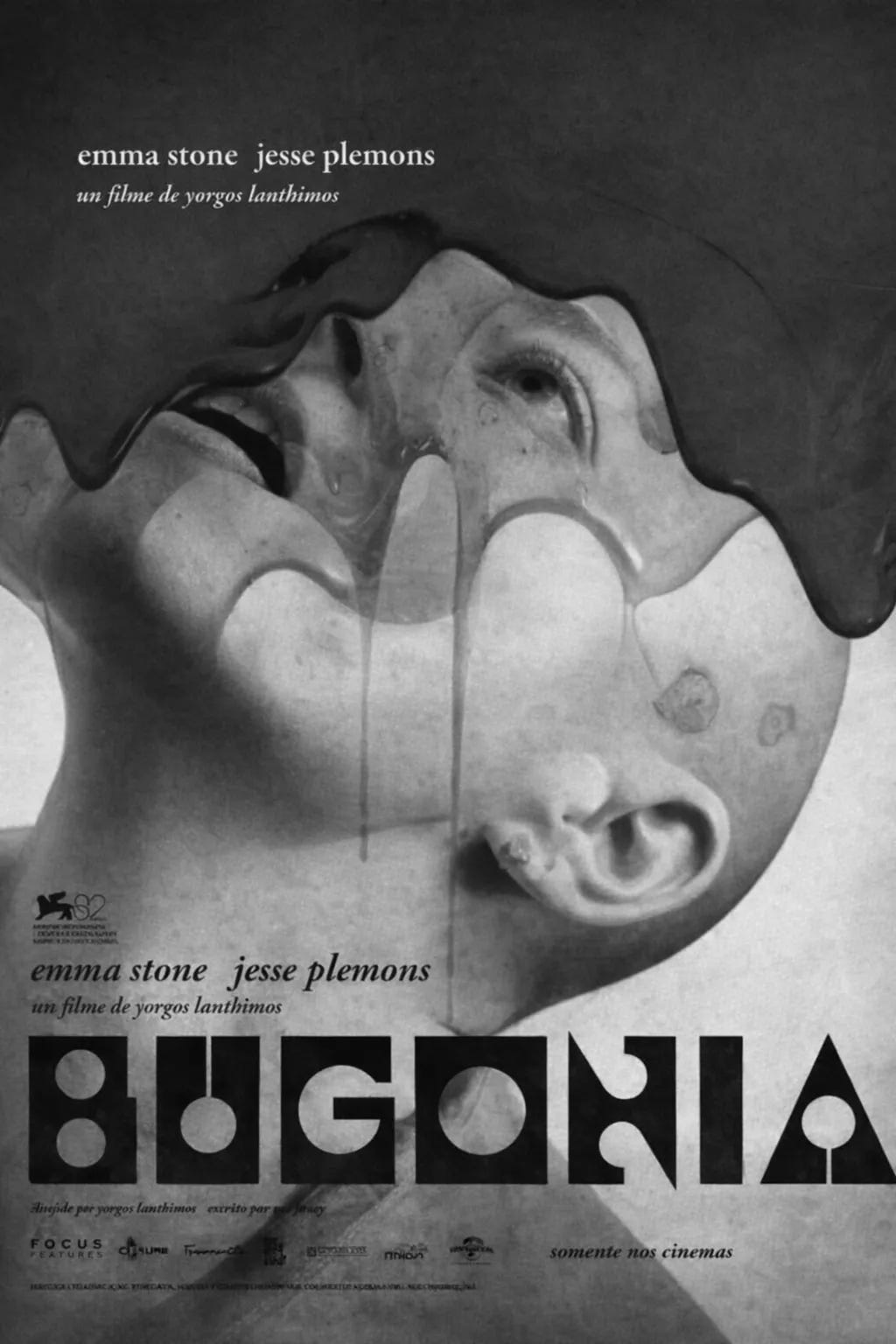
Bugonia: the rite that makes bees from bulls.
It starts in the old, hard way: a young bull is sequestered and killed by young men in a roaring, bloodless sacrifice; it’s then left to rot in airless dark for a month, and as the bullock wanes, the bees wax, great clusters of them.
But as a mythic rite, bugonia does more than imagine the making of bees: it helps us make sense of the world. It carries the potent idea that things don’t end so much as transform; that what appears ruined can still give rise to good, even to life itself. Perhaps, too, it reminds us that we’re all connected, made of the same stuff. And yet there’s something more here, something beyond the comfort of beauty‑from‑destruction. Bugonia shows how imagination shapes reality: how an idea sets into belief, and belief into action, even violence. It also overturns an old fear: the terror of imagination, the dread of what can’t be seen or known. In this telling, the airless dark inspires not terror but wonder.
Bull-born bees: a kind of folk logic insisting that the world is stranger, more fertile, more generative than reason is willing to admit.
✶
Bugonia: a 2025 film riven by the question of whether anything good can come from bad deeds. After all, its antiheroes, Teddy and Don, hatch a plan – kidnapping an alien to force a parley with its leaders – that not only fails to save humanity but arguably hastens its doom. Though it’s mostly Teddy; his imagination overruns him and sweeps up his vulnerable cousin, Don. Teddy’s the one who clings to the belief that something good can – must – come from horror, from sacrifice. He casts himself as a grim utilitarian, someone who has already answered the impossible question of what he would do to save the world, the bees, his mother.
Everything.
… or anything?
In Teddy’s charged, trembling mind, every god-awful act serves a greater purpose, but like the bugonia rite, the kidnapping, the torturing, the killing achieve nothing – no miracle, no rebirth, no dawn of a new era in people-planet relations. Only death: his, Don’s, his mother’s, and all the people he killed along the way, including two Andromedans. Nothing good comes from what he and Don do. Except, perhaps, the provocation of the Andromedans who perform a cosmic bugonia of their own: a bloodless sacrifice of a young, fleshy species, out of which something wondrously good emerges: the flourishing of more‑than‑human worlds.
Bugonia: maybe not so torn about good-from-bad after all.
✶
Bugonia leans hard into the terror-of-imagination theme: paranoia, isolation, anxiety, ambiguity, self-destruction. But Teddy doesn’t fear the dark. He’s convinced he knows exactly what waits behind the door, what lurks in the closet, even how to defeat it. His terror comes from certainty: a story so coherent it hardens into a belief he can’t escape, warning him that any wavering will doom humanity. The weight of that conviction rattles him, driving him to do things he knows are wrong in the name of what he believes is right. He will eat honey, even if he has to bludgeon bulls. For all his supposed rightness, though, he never imagines the aliens might be trying to help humanity, never hears the hopeful note beneath the thrum of his own paranoia.
There’s something else too – something only revealed in the film’s denouement, which brilliantly reconfigures its diegetic reality. Michelle Fuller, Auxolith CEO and supposed Andromedan leader, has been lying all along: masking her identity, her motives, and the true story behind the one she so carefully spun. It’s a façade she maintains right up until a critical moment, when she finally breaks and admits to Teddy that his wild‑eyed theories were right all along. Aliens really are entangling themselves in human affairs. A twist that works not because the truth is hidden, but because it sounds too crazy to accept, and because we’re still so ready to trust the polished lie over the messy truth.
Imagination, as Joseph Conrad suggests, may father terrors; yet as Teddy discovers, reality can sometimes outstrip anything the mind can conjure or even process, especially in a world where collapsing institutions and unravelling certainties make the unbelievable feel newly plausible, even as we struggle to accept it. We see this everywhere: climate collapse unfolds in real time, yet disbelief or sheer stupefaction paralyses us even as the planet warms, seas rise, species vanish, and suffering mounts in plain sight.
Faced with this kind of world, some people crack spectacularly while others fold inward. A few push back hard, hungry for revolution, but that’s another story. Our responses to turmoil are shaped by our histories, our class positions, our fears, and our particular mix of privilege and discrimination. Some spiral into frantic pattern-making; others numb themselves with institutional faith, convinced stability is still possible if they just keep believing. None of these responses are irrational. They’re simply survival strategies shaped by where we stand and by what the world has already taken from us. As has been long said, it’s hard to be well in a sick society.
✶
Bugonia: Teddy Gatz, a young bull sealed off, systematically beaten down, and left to rot in a mix of trauma, loneliness, online conspiracies, and stories designed to amplify fear and fracture communities. I’d ask what we think will come forth from being left in such conditions, but we know what waits in the airless dark of the algorithmic echo chambers we’ve long feared to enter, and we know what emerges from people stripped of everything but a sliver of personhood and a tribe, when bugonia’s promise collapses and rot yields only more rot. We shouldn’t be surprised when bright, curious children, pressed through our systems, harden into bristling, stinging creatures – cocked and primed to lash out at the world – and, like the Andromedan empress, capable of puncturing the delicate bubbles we so carefully blow around ourselves.
Bull-born bees: It’s easy to mock the Teddy Gatzes of this world, to vilify them, to shun their oddness and let imagination’s terror turn them into something to fear. Easy to joke about what planet they came from, right up until conviction hardens into action and something monstrous is done, born of a belief thought righteous or of none at all. And it isn’t malice that closes our eyes to it; we’re often drowning ourselves. But in that abdication, that retreat, many of us – so many of us – are left alone with the worst of the world’s stories, stories that, like Teddy’s anti-corporatocracy crusade, sometimes begin with a spark of truth but too often dissolve into shadow play.
Bugonia: a portrait of humans failing to make connections out of chaos.
✶
Bugonia: Ruin is never an ending; it’s an opening, the place where possibility begins. Like Teddy not getting to see his beloved honey‑makers thrive, we might not see, understand, or even want what comes forth, but something always does. Good, bad, or deadly.
What comes of it is in our hands.
Safe to say, bugonia never brought forth bees, but other forms of life emerged. Imagine what might arise from a world beaten down by corporate capture, broken institutions, and systems that have failed us for generations – what strange, unexpected solidarities might surface if we learned to see what’s still good in each other, and, recognising the forces that set us adrift, could chart a course back toward one another. In that shift, we might finally glimpse the first outlines of a truce, a change with the power to reshape everything.
Thanks for reading The Break! Support my work by subscribing and sharing it with others — it makes a huge difference. And if you want to go the extra mile, you can become one of those truly special people who support my writing for the price of a couple of coffees each month.